Nicolette Good is the most recent winner of the San Antonio Current's reader award for best singer-songwriter. (See story).
The San Antonio music scene is a venerable one, stretching in a long and unbroken line back to Doug Sahm, The Royal Jesters of doo-wop fame, and Lydia Mendoza during the Depression and WWII years.
Good has the voice, the songwriting talent, and the musical ambition to carry on that tradition - as well as adding her own unique and hard-won vision to the S.A. music scene.
Lydia Mendoza (May 21, 1916 – December 20, 2007) was an American guitarist and singer of Tejano music. She is known as La Alondra de la Frontera (The Lark of the Border).
Mendoza was born into a musical family in Houston, Texas. She learned to sing and play stringed instruments from her mother and grandmother. In 1928, as part of the family group Cuarteto Carta Blanca, she made her first recordings for the OKeh company in San Antonio. In the early thirties, Mendoza came to the attention of Manuel J. Cortez, a pioneer of Mexican-American radio broadcasting. Her live radio performances set the stage for her recordings for the Blue Bird label in 1934. One of her recordings, "Mal Hombre", became an overnight success, and led to an intensive schedule of touring and recording. After World War II, Mendoza recorded for all the major Mexican-American record labels. One of the relatively few songs she personally wrote, and a personal favorite, was "Amor Bonito", dedicated to her husband. Lydia Mendoza continued performing and recording until slowed by a stroke in 1988. In 1982, she became the first Texan to receive a National Endowment for the Arts National Heritage Fellowship. In 1999, she was awarded the National Medal of Arts, and in 2003, she was among the second group of recipients of the Texas Cultural Trust's Texas Medal of Arts.
In 2001, Oxford University Press published a 235-page-book on her by Yolanda Broyles-Gonzalez, entitled, Lydia Mendoza's Life in Music. From the introduction:Known as a lone artist and performer, Lydia Mendoza's voice and twelve-string guitar-playing figure prominently in her ability to both nurture and transmit the vast oral tradition of popular Mexican song with beauty and integrity. She sang the songs of the people across generations in the old tradition; all are indigenous to the Americas, and many of them to Texas. It is the music that emerged from the experiences of native peoples (on both sides of the U.S.-Mexico border) within the colonial context of the nineteenth century.Mendoza's prominence and stature as a Chicana idol stems from her sustained presence and perpetual visibility within a complex network of social and cultural relations in the twentieth century. Along with being one of the earliest female recording and touring artists, she is loved as a voice of working-class sentimiento , sentiment and sentience, through song, which is one of the most cherished of Chicana/o cultural art forms. Through her vast repertoire and unmistakable interpretive skill in the shaping of songs she is a living embodiment of U.S.-Mexican culture and a participant in raza people's protracted struggles for survival.
Ray Wylie Hubbard (born 13 November 1946 in Soper, Oklahoma) is an American country music singer and songwriter.
Hubbard grew up in southeastern town of Hugo, Oklahoma. His family moved to Oak Cliff in south Dallas, Texas in 1954. He attended Adamson High School with Michael Martin Murphey, who had his own band at the time. Hubbard graduated in 1965 and enrolled in college as an English major. He spent the summers in Red River, New Mexico playing folk music.
During his time in New Mexico, Hubbard wrote "Up Against the Wall, Redneck Mother", made famous by Jerry Jeff Walker's 1973 recording. Hubbard recorded for various labels but struggled with sales; his mix of country, folk and blues elements didn’t find an audience. After leaving the scene and struggling with personal problems, he returned to recording with Lost Train of Thought in 1992 and Loco Gringo's Lament in 1994.
Today Ray Wylie Hubbard is an elder statesman of the Texas music scene. From New Braunfels, Texas, Hubbard hosts a Tuesday night radio show in called "Roots & Branches". This program promotes new and established Americana artists. Like some other performers in his genre, he is perhaps as popular in Europe as in the US--Hubbard has been invited by record companies in the Netherlands to produce albums. His most recent recordings have been produced by Texas guitarist Gurf Morlix.
Ryan Bingham has spent most of his life on the road, first on the rough-and-tumble rodeo circuit, then moving from town to town on the equally volatile roadhouse musical circuit. Those travels have given him plenty of material to draw from – and plenty of reason to stop for a moment to dig in his heels and take a stand.
That’s exactly what the Texas-bred troubadour does on his second Lost Highway album, Roadhouse Sun, a hardscrabble collection that’s at once unblinkingly personal and unapologetically political – the latter a new and bracingly vivid addition to Bingham’s palette. The expanded consciousness bursts to the surface of several cuts on Roadhouse Sun – nowhere more movingly than on “Dylan’s Hard Rain,” a stark look into the darker corners of an America in which the storm its namesake sang of has blown through.
“With all that’s happened politically and economically in the last couple of years, I felt like there was a lot to say,” explains the 28-year-old singer-songwriter. “As a young person, I felt like it was time to get involved, to write something that wasn’t just about Saturday nights in bars. And as far as Dylan? Things that were happening back then are still happening. Things keep repeating themselves.”
Roadhouse Sun showcases Bingham’s flair for cutting a listener to the quick with slashing, blues-inflected guitar leads that’d do Lone Star forebears like Lightnin’ Hopkins proud – his approach on the steely “Endless Ways” – and then offering a balm of bucolic melody, like that of the soaring “Bluebird.” He and his road-tested band stretch out most intriguingly, however, on the epic “Change Is,” seven minutes of meditative, hypnotic riffing that builds to a near-psychedelic crescendo as Bingham spins his tale of empowerment and responsibility.
“In some ways, I’d gotten burned out on the straight-ahead country scene,” he says. “Because I wear a cowboy hat, people assume we’re just this honky-tonk band, and we’re not. I want to be seen as a versatile artist who draws on a lot of different things and tells a lot of different stories.”
They’re tough stories, to be sure, but Bingham has come by them honestly. He’s lived on his own since his mid-teens, when circumstances and substance abuse tore apart his nuclear family. Rather than get sucked into the system that’s destroyed so many adolescents, he took a road far less traveled – riding bulls on the highly-competitive rodeo circuit around the Midwest and southwest. It was on these long hauls that Bingham was able to get in touch with his musical muse, taking things public one night at a bar in Stephenville, Texas. “A bunch of friends asked me to play a couple songs for them. I went out and got my guitar and the owner said ‘you oughta come on in and play now and then,’” he recalls. “So I did -- I started playing every Wednesday night and people started showing up to hear me play -- it was pretty much an accident, I guess.” Read more about Ryan Bingham
Bob Wills and The Texas Playboys - New San Antonio Rose:
James Robert Wills (March 6, 1905 – May 13, 1975), better known as Bob Wills, was an American Western swing musician, songwriter, and bandleader, considered by many music authorities one of the fathers of Western swing and called the King of Western Swing by his fans.
He was born in Limestone county near Kosse, Texas to Emma Lee Foley and John Tompkins Wills. His father was a statewide champion fiddle player and the Wills family was either playing music, or someone was "always wanting us to play for them," in addition to raising cotton on their farm.
In addition to picking cotton, the young Jim Bob learned to play the fiddle and the mandolin. Both a sister and several brothers played musical instruments, while another sister played piano. The Wills frequently held country dances in their home, and there was dancing in all four rooms. They also played at 'ranch dances' which were popular in both West Texas and eastern New Mexico at the time the Wills lived in Hall county.
Wills not only learned traditional music from his family, he learned some Negro songs directly from African Americans in the cotton fields near Lakeview, Texas and said that he did not play with many white children other than his siblings, until he was seven or eight years old. African Americans were his playmates, and his father enjoyed watching him jig dance with black children.
"I don't know whether they made them up as they moved down the cotton rows or not," Wills once told Charles Townsend, author of San Antonio Rose: The Life and Times of Bob Wills, "but they sang blues you never heard before."
While in Fort Worth, Wills added the "rowdy city blues" of Bessie Smith and Emmett Miller to a repertoire of mainly waltzes and breakdowns he had learned from his father, and patterned his vocal style after that of Miller and other performers such as Al Bernard. Wills acknowledged that he idolized Miller.
Wills' daughter, Rosetta: "He had a lot of respect for the musicians and music of his black friends." She remembers that her father was such a fan of Bessie Smith, "he once rode 50 miles on horseback just to see her perform live."
Wills recalled the early days of what became known as Western swing music, in a 1949 interview. "Here's the way I figure it. We sure not tryin' to take credit for swingin' it." He said that "We'd pull these tunes down an set 'em in a dance category. It wouldn't be a runaway, and just lay a real nice beat behind it an the people would get to really like it. It was nobody intended to start anything in the world. We was just tryin' to find enough tunes to keep 'em dancin' to not have to repeat so much."
"We left New York City, with nuthin' but a song, she'll be coming' 'round the mountain when she comes. We wound up in Woodstock, at an old time jamboree, came to see the man behind the drums.
Levon digs the doghouse, playing in The Band, when he locks in to that backbeat it ain't hard to understand.
Get your body movin', celebrate your soul,
Levon digs the doghouse, that's sho-nuff rock and roll.
Son of a plain dirt farmer, from southeast Arkansas,
he was born in a bare ramblin' shoe.
Up and down the highway, and all around the world,
laying down the rhythm and the blues.
We were hangin' from the rafters, singing every song,
that big barn band was hot as it could be.
Up there in the spotlight, the man behind the drums,
was takin' all the load off for you and me.
Yea, Levon digs the doghouse, that's sho-nuff rock and roll."
The "Levon" mentioned in the lyrics is, of course, Levon Helm of The Band, singer of such classics as The Weight, and The Night They Drove Old Dixie Down.
Esteban "Steve" Jordan (born February 23, 1939) is a conjunto (norteño) and Tejano musician from the United States. He is also known as "El Parche", "The Jimi Hendrix of the accordion", and "the accordion wizard". An accomplished musician, he plays 35 different instruments.
Born in Texas to migrant farm workers and partially blinded as an infant, Jordan was unable to work in the fields. Left at home, he found friendship and guidance among the elderly. At a very young age he was introduced to music, especially the accordion. At the time, the musician Valerio Longoria followed the community of migrant farm workers and played for them in the labor camps. These circumstances brought the two together and the young Esteban mastered the instrument quickly. While he has remained close to his traditional conjunto roots, he has never limited himself musically. More than any other accordionist, Jordan pushes the diatonic accordion to its limits, both musically and physically, playing traditional conjunto, rock, jazz, salsa, zydeco and more.
Unlike many conjunto musicians, he has kept abreast of technological developments, using devices such as phase shifters, fuzzboxes, and synthesizers, and was one of the few conjunto musicians to weave styles such as fusion jazz and rock into his music. He has also recorded country, western and mambo numbers. Members of his family frequently back him up, including his sons Steve Jr., Steve III, Richard, his eldest daughter Anita, and youngest daughter Estela. Currently, Steve III (guitar) and Richard (bass) accompany Esteban on-stage and in recording.
New wave polka bands such as Brave Combo have cited Jordan's influence. In 1986 he was nominated for a Grammy, but lost out to his old friend Flaco Jiménez. His bid for mainstream presence continued in 1986 when he was asked to do the soundtrack for the Cheech Marin film Born in East L.A.
He has appeared in the film Texas Conjunto: Música de la gente, a documentary about Texas conjunto music. He has also appeared in True Stories, an American musical film directed by and starring musician David Byrne. He did the music and appeared as an accordion street player in the film Born in East L.A. starring Cheech Marin.
From the NPR report The Corrido of Esteban 'Steve' Jordan:
"...Jordan's liver is diseased with cirrhosis and cancer. He underwent chemotherapy last year. But Jordan says he feels good these days. And he's finally begun granting interviews — he used to be notoriously elusive. Though he's ailing, he's still got the old attitude.
"Right now, I'm so far advanced that nobody can catch up to me," Jordan says. "Nobody, I mean, that includes nobody. Do you understand what I'm saying?"
Esteban Jordan grew up the youngest of 15 siblings in a family of southern Texas farmworkers. They picked sugar beets in Colorado, cotton in Arizona, figs in California. But Jordan couldn't work in the fields.
"I couldn't see a damn thing," he says. "I was a young kiddie. And I was turned loose at that age: Go ahead on, find yourself something to do."
Jordan says he started making a living as a musician when he was 7. By the late 1980s, it looked like his career was finally taking off. He played the Berlin Jazz Festival, had a Grammy-nominated album and played the soundtrack for Cheech Marin's Born in East L.A. Hohner even produced the "Steve Jordan Tex-Mex Rockordion."
Back then, some even started calling him "the world's best accordionist."
Jordan should have ridden that wave 20 years ago. He should be set now, sitting back, enjoying the fruits of his international renown. (He has rabid fans in Germany and Japan.) But he says he isn't seeing any royalty payments.
"Nada," he says. "Not a half a penny. They've been taking advantage of the handicapped."
He isn't too happy about it, either.
"Of course I'm bitter," Jordan says. "Everybody's living in Oceanside, and here I am living over here, a poor little dude."
He speaks from the living room of his rundown rental house. The linoleum is cracked, and two dogs mill about a bare front yard.
But Jordan has a plan to finally take charge of his music. He says he has nine CDs' worth of unreleased material in which he plays and overdubs every instrument. He's mixing it at his house, which he shares with his two sons, Esteban III and Richard..."
"The man outside he works for me, his name is Mariano
He cuts and trims the grass for me he makes the flowers bloom
He says that he comes from a place not far from Guanajuato
Thats two days on a bus from here, a lifetime from this room.
I fix his meals and talk to him in my old broken spanish
He points at things and tells me names of things I can't recall
Sometimes I just can't but help but wonder who this man is
And if when he is gone will he'll remember me at all
I watch him close he works just like a piston in an engine
He only stops to take a drink and smoke a cigarette
When the day is ended, I look outside my window
There on the horizon, Mariano's silhouette
He sits upon a stone in a south-easterly direction
I know my charts I know that he is thinking of his home
I've never been the sort to say I'm in to intuition
But I swear I see the faces of the ones he calls his own
Their skin is brown as potters clay, their eyes void of expression
Their hair is black as widow's dreams, their dreams are all but gone
They're ancient as a vision of a sacrificial virgin
Innocent as crying from a baby being born
They hover around a dying flame and pray for his protection
Their prayers are all but answered by his letters in the mail
He sends them colored figures that he cuts from strips of paper
And all his weekly wages, saving nothing for himself
It's been a while since I have seen the face of Mariano
The border guards they came one day and took him far away
I hope that he is safe down there at home in Guanajuato
I worry though I read there's revolution every day"
Robert Earl Keen, Junior (born January 11, 1956 in Houston, Texas) is a Texan singer-songwriter. He is popular with traditional country music fans, folk music fans, the college radio crowd and alt-country fans. Keen currently resides in Kerrville, Texas and maintains a ranch in Medina, Texas.
Keen attended Texas A&M University, where he majored in English. Disappointed in the College Station music scene, he began playing guitar and learned to read and write music, basing his style on folk, country, blues and rock roots. In 1974 he rented a house from landlord Jack Boyett, where his neighbor was a then-unknown Lyle Lovett. The two became fast friends and performed together on the front porch many evenings. This eventually grew into inspiration for a song entitled "The Front Porch Song", which both would add to their repertoire.
In 1980, Keen graduated from Texas A&M and moved to Austin, Texas, where he began writing for a newspaper. Soon he was performing in Austin's nightclubs and live music venues, building a solid following. In 1984 he financed the recording of his own EP and distributed it regionally. In 1986, He moved to Nashville, Tennessee. Discouraged by the polish of the new country sound and unable to land a recording contract, Keen moved back to Austin. In 1988, he was living in Bandera, Texas with his wife, Kathleen. In 1989 he released his national debut album, West Textures. His 1993 release, A Bigger Piece Of Sky, gained wider acclaim, both amongst fans and critics. Over the next ten years, Keen would continue to write, record, perform and tour. In 1994 he performed in the musical Chippy. Keen's 1997 album Picnic features a picture of Keen's own car in flames at Willie Nelson's 1974 Fourth of July picnic/concert. He tells the story on the No. 2 Live Dinner album in the introduction to the song "The Road Goes on Forever."
"Dallas is a rich man with a death wish in his eye."
Dallas, by Jimmie Dale Gilmore:
"Did you ever see Dallas from a DC-9 at night?
Well Dallas is a jewel, oh yeah, Dallas is a beautiful sight. And Dallas is a jungle but Dallas gives a beautiful light.
Did you ever see Dallas from a DC-9 at night? Well, Dallas is a woman who will walk on you when you're down. But when you are up, she's the kind you want to take around. But Dallas ain't a woman to help you get your feet on the ground.
Yes Dallas is a woman who will walk on you when you're down.
Well, I came into Dallas with the bright lights on my mind, But I came into Dallas with a Dollar and a dime.
Dallas is a rich man with a death wish in his eye.
A steel and concrete soul with a warm hearted love disguise. A rich man who tends to believe in his own lies.
Dallas is a rich man with a death wish in his eyes."
Jimmie Dale Gilmore (born May 6, 1945) is a country singer, songwriter, actor, recording artist and producer, currently living in Austin, Texas. Gilmore is a native of the Texas Panhandle, having been born in Amarillo, Texas and raised in Lubbock, Texas. His earliest musical influence was Hank Williams and the honky tonk brand of country music that his father played. In the 1950s, he was exposed to the emerging rock and roll of other Texans such as Roy Orbison and Lubbock native Buddy Holly, as well as to Johnny Cash. He was profoundly influenced in the 1960s by the likes of The Beatles and Bob Dylan and the folk music and blues revival in that decade.
With Joe Ely and Butch Hancock, Gilmore founded The Flatlanders. The group has been performing on and off since 1972. The band's first recording project, from the early 1970s, was barely distributed. It has since been acknowledged, through Rounder's 1991 reissue (More a Legend Than a Band), as a milestone of progressive, alternative country. The three friends continued to reunite for occasional Flatlanders performances, and in May 2002 released a long-awaited follow-up album, Now Again, on New West records.
After briefly attending Texas Tech University, Gilmore spent much of the 1970s in an ashram in Denver, Colorado, studying metaphysics with teenaged Indian guru Prem Rawat, also known as Maharaji. In the 1980s, he moved to Austin. His first solo album, Fair and Square, was released in 1988.
Gilmore's fans admire his fine tenor voice, which delivers expressive, pure, country singing.
Gilmore also had a small but memorable role in the 1998 movie The Big Lebowski as a bowler named Smokey, an aging, emotionally "fragile" pacifist threatened with a pistol by the main character's right-wing sidekick (John Goodman). He has also been a guest on Jay Leno, David Letterman, A Prairie Home Companion, and Fresh Air with Terry Gross.
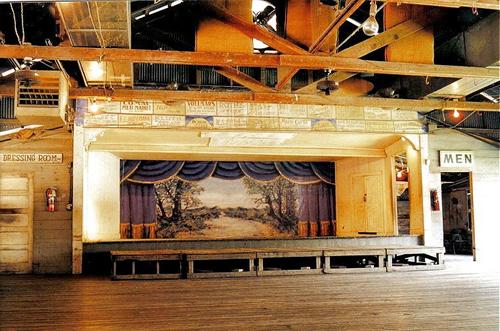
In the long and storied history of the Texas dance hall, Gruene Hall holds a unique place. And it's not just because it's the oldest continually operating dance hall in the state of Texas, but also because it has served as both a launching pad and a continuing venue for some of the most influential musicians in American music. Gruene Hall has been pivotal in the careers of such musicians as George Strait, Lyle Lovett and Hal Ketchum, and has nurtured blues, rockabilly, folk, and singer/songwriter artists. This famous stage has also welcomed the likes of Bo Diddley, The Dixie Chicks, Jerry Lee Lewis, Garth Brooks, Willie Nelson, Merle Haggard, Junior Brown, Robert Earl Keen, Stevie Ray Vaughn, and many more.


![Reblog this post [with Zemanta]](https://lh3.googleusercontent.com/blogger_img_proxy/AEn0k_tsq3fabWWVHyPVPXIDEosDBFX7ohrwcPlXvJ2YEN3sqy6iVaorztUh5hGDXDyGwKfbcKZgpD8C-GNU0Rm-tF45iyFW0VFXcPGbBYfLHybnwNP2srJgYAuDt-P3QLRLpCkV7k1dQB2OJ3Obi2DWTzw=s0-d)

![Reblog this post [with Zemanta]](https://lh3.googleusercontent.com/blogger_img_proxy/AEn0k_tOqTuxTPQ2Ky6EyGs6c1nVPeifDYaRp9jd2W6UFb3FFZeykJqBTuUDZ0v_Wt2VuzyhRc0JjpdBCDZoKX8sUQl_t5NBaj7KQLSuk7Zkyah4LlMSwtSFvtISGk0xB0u-3W8XTq4jRck5ZQQv1oyC4_2I=s0-d)

![Reblog this post [with Zemanta]](https://lh3.googleusercontent.com/blogger_img_proxy/AEn0k_v-knd9PSI-TS-I1UeQwQ1eIKBHAcBrdCgEjX5O7mgsVZFvNr5Q3bbXuJokQNLo-Bp0aa2-JFO4YCT5YFoenS4aXvsmVOAStmJOqokIkIEH151cjE0W0FlSSyuzZjnhpdocLvyKEGxG5LIC_-Da81LH=s0-d)


![Reblog this post [with Zemanta]](https://lh3.googleusercontent.com/blogger_img_proxy/AEn0k_syb3jq6TcIcGRYApgF4ceOOFygRNbWyh2PgvzNfsrUfGs9LeyPXuWIj62ZWUjxCtCd9qPCesXELcfGIrvgDedQSiRhB8iQVwti-savEMWgtPbgv0Sw5Gw7WX9fMj-S0xYv1iLuGkw601Er5oVcTUY=s0-d)


![Reblog this post [with Zemanta]](https://lh3.googleusercontent.com/blogger_img_proxy/AEn0k_udvEzZL_Kf87FWHx8rZllOnv1-X6wiOtk5UuJshxB2hXO73UKsjBh4wuBWvspxDptvCPpbF-DOQ5bIUU8qQHHeZRPdT0-tVjMqvA114Fd0QoaPgq6lziiSkJAQ3GzRHkKDpS1nyg2RPMEabeo7VyNq=s0-d)

![Reblog this post [with Zemanta]](https://lh3.googleusercontent.com/blogger_img_proxy/AEn0k_vcy3Sq5f62L3Wl6GUHc19ARLKwjLmGL55HNckR8VEivt8Y_fIFqMSqKfu0scBr-wQhhKtion5M9bydTjjoq81t_EufIGEbFodZcgcotKLfThsaAwRRvDurhmyB95UYF1Ki0mZrnvecrvTxCbGOtFI=s0-d)

![Reblog this post [with Zemanta]](https://lh3.googleusercontent.com/blogger_img_proxy/AEn0k_vgXCph7RwgvoaJhr1BCKLxZ2hsPK-3qTNo3tw2MQLxVVrYuu0N2bztJbpzVcpJPJ5unA0-6f_ZoTzNnQM8Jx4LHwZuipeVmAZHtdkCvxPqqcYHXgrrG_DGRrx57A6xdInFb-K0chA5vCbcXsthC9A=s0-d)

![Reblog this post [with Zemanta]](https://lh3.googleusercontent.com/blogger_img_proxy/AEn0k_udCdnvSc2WKd_r4uVq97QAXeslDLPUtR72BVTlbgXuyNlg7BI43mhN7JFeeHNPaRB3y2xJkVT5_xhsRbYL6zLiG4s7dMdCcM2tiYBAEcpZIL2IeGNpCrEvF0iR9d538SZ9QA7G2t_Nlo0RDD60lAHC=s0-d)


![Reblog this post [with Zemanta]](https://lh3.googleusercontent.com/blogger_img_proxy/AEn0k_uiwVYunOtvmxoRvSVgdgAtHINg1hJ4HMcwFQ2nrW7-zrdIvq7dJMfKfmmzJrSZK7hVSShEcdVXQ4AXRKWhMng_NRDNdqL0GCGL0WjlptYfGwsLN6HEZeZezr5E97AxHTnJueQH9-hucvhA-1N9Y7k=s0-d)
